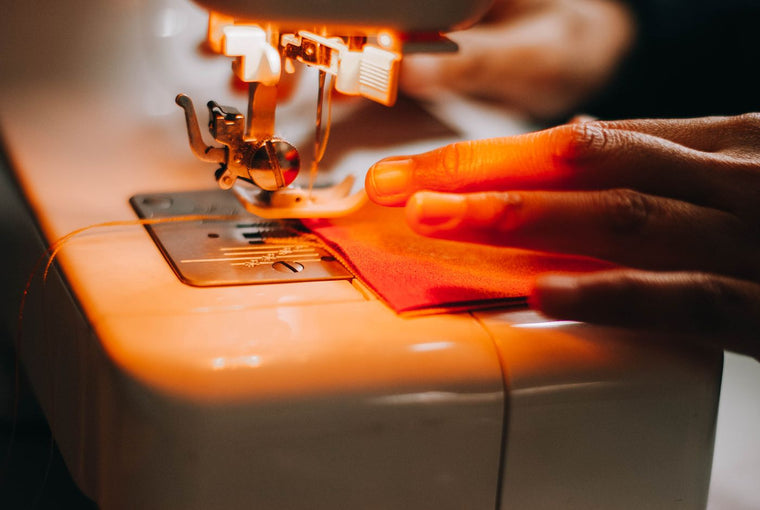
A spool and a bobbin can look like close relatives until the machine starts asking them to do completely different jobs. Sewing machine spool thread is the upper thread that travels from the spool pin, through the machine's guides and tension system, and into the needle. The bobbin holds the lower thread beneath the needle plate. In a standard lockstitch, those two threads interlock inside the fabric to form each stitch.
Choose a smooth, project-appropriate sewing thread, use the exact bobbin type specified for your machine, and follow your manual's threading and winding paths. Those three habits prevent a surprising amount of tangling, loose stitching and sewing-table negotiation.
STI Ideal Threads has supplied sewing thread since 1999, and you can browse thousands of colours across the range. Each Custom Thread Box contains ten 400-yard spools of 40/2 polyester sewing thread, so you can plan useful colours for both the upper path and the bobbins you wind from them.
What is sewing machine spool thread?
Sewing machine spool thread is the supply of thread placed on the machine's spool pin or a compatible external thread stand. During sewing, it feeds through a planned route that usually includes one or more thread guides, the tension discs, the take-up lever, a needle-bar guide and the needle eye.
The exact path varies by machine. Always raise the presser foot before threading unless your manual says otherwise; on many domestic machines, this opens the tension discs so the thread can settle between them. Raise the needle and take-up lever as directed, then follow the numbered route printed on the machine or shown in its manual.
For an illustrated start-to-finish overview, use our guide on how to choose thread for a sewing machine alongside your model's instructions.
Spool vs bobbin: what is the difference?
| Part | Where it sits | What it does | What to check |
|---|---|---|---|
| Spool | On the spool pin or thread stand | Supplies the upper thread to the needle | Correct orientation, spool cap and unobstructed feed |
| Bobbin | In a bobbin case beneath the needle plate | Supplies the lower thread | Correct bobbin class, even winding and correct insertion direction |
| Spool pin | Usually on top or behind the machine | Holds the spool while thread feeds | Vertical or horizontal setup specified by the manual |
| Bobbin winder | Usually on top of the machine | Transfers thread from the spool to an empty bobbin | Thread follows the winding guide and pre-tension disc |
A bobbin is not simply a miniature spare spool. Its dimensions, material and shape are part of the machine's stitch-forming system. Singer and iFixit both advise using the bobbin style intended for the machine. A bobbin that looks almost right may still sit incorrectly or feed poorly, so check the manual or model-specific parts list before buying extras.
How the spool and bobbin make a stitch
Most domestic sewing machines form a lockstitch using two threads. The needle carries the upper thread down through the fabric. A hook catches a loop of that thread and passes it around the bobbin thread. The two threads tighten together between the fabric layers.
This explains why a problem seen on one side may begin on the other:
- Loops or nests underneath the fabric often point to incorrect upper threading.
- Loose upper stitches may involve the bobbin path or insertion.
- Uneven stitching can come from winding, threading, needle choice, tension or a thread snag.
Before turning a tension dial, rethread the upper path and bobbin carefully. If the result remains unbalanced, work through the sewing machine thread tension guide and test on a fabric offcut.
How to set up a spool of thread
1. Check the spool pin orientation
Your machine may use a vertical spool pin, a horizontal pin with a cap, or both. Put the spool on in the orientation shown in the manual. Cross-wound and stacked threads may feed differently, and a spool that jerks or catches cannot give the tension system a steady supply.
2. Use the correct spool cap or holder
On a horizontal pin, choose a cap that supports the spool without crushing it. It should be large enough to stop the spool slipping off but should not clamp the thread. On a vertical pin, use the felt pad or holder specified by the manufacturer.
3. Check for snags
Look at the spool rim, retaining notch and label. If the thread catches at the same point on every turn, reposition the spool so the notch is away from the feed path, or follow your machine manufacturer's alternative setup.
4. Follow every guide
Thread guides are functional, not decorative silver jewellery for the machine. Missing one can change how the thread enters the tension discs or needle. Follow the arrows and numbered route, with the presser foot and needle positioned as the manual directs.
5. Test before sewing the project
Sew a short seam on a folded offcut of the same fabric. Check both sides for balanced stitches, then adjust one variable at a time. This is faster than unpicking a finished hem and having a thoughtful conversation with the seam ripper.
How to wind a bobbin evenly
These are general steps; your model's manual takes priority.
- Choose the correct empty bobbin. Match the class, dimensions and material required by the machine.
- Place the thread spool on the spool pin. Add the correct cap or holder if the machine uses one.
- Follow the bobbin-winding path. Lead the thread through the bobbin-winding guide and pre-tension disc shown on the machine.
- Attach the thread to the bobbin. Many bobbins are threaded through a small hole from the inside out; follow the manual if yours differs.
- Seat and engage the bobbin winder. Push the shaft or control into winding mode as instructed.
- Start slowly. Hold the tail for the first few turns if directed, stop, and trim the excess tail.
- Wind at a steady pace. Let the machine distribute the thread. Do not guide it with fingers near moving parts.
- Stop at the proper fill level. The thread should sit below the bobbin rim, not bulge beyond it.
- Disengage winding mode. Cut the thread, remove the bobbin and return the machine to sewing mode.
An evenly wound bobbin looks firm and level, without soft loops, cones, dips or a mound in the centre. iFixit's guide describes a good wind as smooth, compact and below the rim. If it is loose, unwind it and try again after checking the pre-tension path.
Should the spool and bobbin thread match?
Using the same thread type and colour above and below is a dependable starting point for ordinary seams. It makes winding straightforward and keeps both sides visually consistent when the stitch is balanced.
They do not always have to match. If the top and underside of a project use different fabric colours, you may choose two close shades. Test first: small specks of the opposite thread can show if the tension is not balanced, especially with high-contrast colours.
For inconspicuous seams, match the thread to the area where the stitches will be visible. When two shades seem close, the slightly darker choice often blends more quietly than a lighter one. STI Ideal's fabric photo colour matcher can help identify the closest available shade; it is a useful shortlist, not an exact-match guarantee.
Choosing practical spool thread
Match the thread to the fabric, needle and purpose rather than choosing by colour alone. A general-purpose polyester thread is useful for many garments, alterations, repairs and craft projects. STI Ideal's 40/2 polyester sewing thread is a fine two-ply option intended for many everyday sewing tasks; very heavy denim, upholstery, leather and specialist outdoor work may require a different thread.
Also consider quantity. Each STI Ideal spool contains 400 yards, approximately 366 metres. One spool can supply both the upper thread and the bobbin, but long seams, repeated samples or multiple garments use more than the visible stitching suggests. Wind the bobbin before starting and keep enough thread on the spool to finish the upper path.
If you sew with a small palette repeatedly, build a Custom Thread Box with ten spools. Choose one shade or mix up to five colours, which can give you duplicates of dependable neutrals plus current project colours.
Common spool and bobbin problems
Thread nests beneath the fabric
Stop sewing, raise the presser foot and rethread the upper path from the beginning. Confirm that the take-up lever and every guide are threaded, then replace and retest the bobbin.
The spool jerks or stops feeding
Check the spool's orientation, cap size and retaining notch. Remove loose thread wrapped around the spool pin. If using a cone or unusually large spool, use only a stand and feed arrangement compatible with the machine.
The bobbin winds loosely
Rethread the bobbin-winding path and ensure the thread sits securely in the pre-tension disc. Wind at an even speed. Do not sew with a soft, springy bobbin; unwind and rewind it.
The bobbin fills unevenly
Reseat the bobbin on the winder shaft and confirm that it is compatible. Check the winding guide. If the problem continues after following the manual, the winder may need adjustment or service.
The machine will not sew after winding
Return the bobbin winder to its sewing position and re-engage the handwheel or clutch if your model requires it. This small switch has interrupted many ambitious projects and at least one cup of tea.
Thread breaks repeatedly
Check for a damaged needle, incorrect needle insertion, rough spool edges, missed guides, unsuitable tension or a thread that is too heavy for the needle. Change one factor at a time and test on an offcut.
Frequently asked questions
Is a sewing machine spool the same as a bobbin?
No. The spool supplies the upper thread and usually sits on top of or beside the machine. The bobbin is a smaller, machine-specific component that supplies the lower thread beneath the needle plate.
Can I put any spool of thread on a sewing machine?
Use thread suitable for the machine, needle, fabric and project. The spool must also feed smoothly from the pin or an approved thread stand; oversized cones and unusual spool shapes may need a compatible setup.
Can I use any bobbin that fits in the bobbin area?
No. Use the exact bobbin class, dimensions and material specified for your machine. A nearly matching bobbin can cause poor feeding or stitch problems even if it seems to fit.
Does bobbin thread need to be the same colour as spool thread?
Not always, but using the same colour is the simplest choice for ordinary seams. Different colours can suit a two-sided project, provided you test the tension because contrast makes small imbalances easier to see.
Why does my thread keep catching on the spool?
The spool may be facing the wrong direction, the cap may be the wrong size, or the thread may be catching on a retaining notch or damaged edge. Follow the machine manual's spool-pin setup and watch the spool during a slow test.
How full should a sewing machine bobbin be?
Wind it evenly and stop before thread extends beyond the rim. Many machines stop automatically, but inspect the result: it should be firm, level and free of loose loops.
Can I wind a bobbin from an STI Ideal spool?
Yes, when the 40/2 polyester sewing thread suits your project and machine. Place the spool on the correct pin, follow the model-specific winding path and use the required bobbin type.
Build your box
When you know what your fabric and project need, you can build a custom thread box — 10 spools in one shade or a mix of up to five, from thousands of colours in 40/2 polyester. New to choosing thread? Start with choosing the right thread for your project or thread weights explained, or browse the full range in our catalogue.