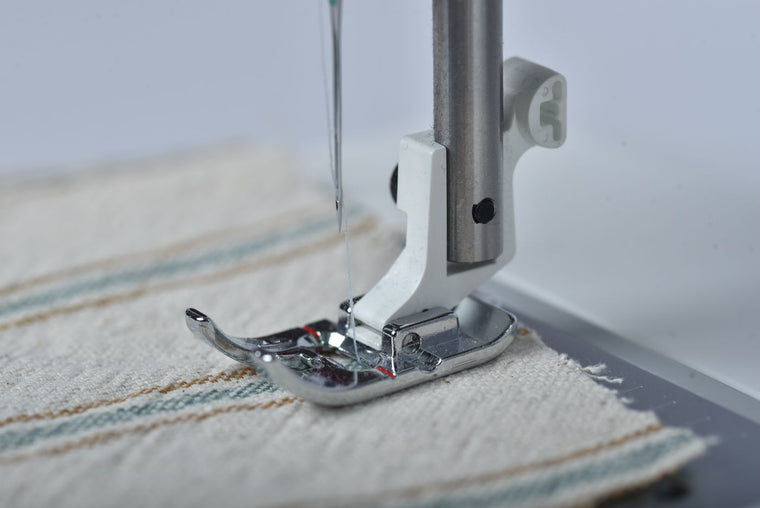
Choosing sewing thread should not feel like choosing a life partner, although some seams do ask for commitment. Choose sewing thread by matching the thread fibre, weight, colour, and spool size to your fabric and project. For many everyday projects, 40/2 polyester sewing thread is a practical choice, especially when you can choose colours that match the fabric you actually sew.
Thread choice looks small until the wrong colour sits proudly on the seam. Then it becomes the main character. This guide helps you choose sewing thread for garment making, repairs, quilting, craft projects, sewing machines, and small-batch work.
Start with the project
The best sewing thread depends on what you are making. Ask:
- Is this a garment, repair, quilt, craft project, or sample?
- Is the fabric light, medium, or heavy?
- Will the stitching be hidden or visible?
- Does the thread need to blend in or stand out?
- Am I sewing by machine or by hand?
If the stitching is hidden inside a seam, colour can be close. If the stitching is visible, colour and finish matter much more.
Choose the right fibre
Common thread fibres include polyester, cotton, nylon, silk, metallic, and speciality threads. For everyday sewing, polyester and cotton are the two most familiar choices.
Polyester sewing thread is useful for garment making, alterations, repairs, craft projects, machine sewing, and projects needing broad colour choice. Cotton thread may be preferred for some quilting projects, natural-fibre sewing preferences, traditional techniques, and projects where the pattern specifically asks for cotton. STI Ideal sells 40/2 polyester sewing thread; it should not be described as cotton. For a fuller comparison, read polyester vs cotton thread.
Understand thread weight
Thread weight affects how stitching looks and how seams feel. A thread that is too thick can make seams bulky. A thread that is too fine may not suit heavier fabric. STI Ideal's 40/2 polyester sewing thread is a practical everyday thread for many garments, repairs, crafts, and small studio projects. Use a heavier speciality thread only when the fabric or technique calls for it, such as denim topstitching, upholstery, or high-stress seams. Our guide to thread weights explained covers what 40/2 really means.
Choose thread for a sewing machine
Many people search for “thread for sewing machine” because they are not sure which thread to buy. A good sewing machine thread should feed smoothly, suit the fabric, and work with the correct needle. If your machine is misbehaving, check:
- Is the machine threaded correctly?
- Is the bobbin wound evenly?
- Is the needle suitable for the fabric?
- Is the thread catching on the spool?
- Is the tension set correctly?
A misbehaving machine is usually asking for correct threading, not a new thread.
Match colour to the fabric
Thread colour matching is often the detail people notice first. Match the thread to the part of the fabric where the stitching will show.
For solid fabric, compare thread in natural light, lay loose thread across the fabric, and choose the shade that disappears from arm's length. For prints, match the background colour, match the darkest recurring colour, or choose a neutral that blends across the print. If two shades are close, slightly darker thread often blends better than lighter thread. There is more detail in our guide to matching thread colour to fabric.
Think about spool size
A spool of thread should be practical for your project and easy to store. Each STI Ideal spool is 400 yards, approximately 366 metres. That size works well for garment projects, repairs, craft sewing, building a colour set, and small studio use. Tiny emergency spools run out quickly, and oversized cones can be awkward for hobby storage — a 400-yard spool sits nicely in the useful middle.
Build a useful thread set
Instead of buying a fixed colour set, build a thread box around your real projects. A practical sewing thread set might include:
- White or off-white
- Cream or beige
- Light grey
- Dark grey or black
- Navy
- Two current project colours
- Two repair shades
- One accent or fabric-matched shade
STI Ideal's Custom Thread Box contains 10 spools. Customers can choose one shade or mix up to five colours from thousands of colours. STI Ideal has supplied sewing thread since 1999 and has sold over 60 million spools. For colour planning, see how to build a useful 10-spool thread box.
Quick checklist
Before buying sewing thread, check the project type, fabric weight, thread fibre, thread weight, needle and machine compatibility, colour match, spool size, and how you will store and organise it.
Frequently asked questions
What thread should I use for a sewing machine?
For many everyday sewing machine projects, a smooth polyester sewing thread is a practical choice. Match the thread weight, needle, and tension to your fabric.
What is the best sewing thread for beginners?
Beginners usually benefit from versatile polyester sewing thread in useful neutral and project colours.
Is polyester thread good for sewing?
Yes, polyester sewing thread is useful for many everyday sewing projects, including garments, alterations, repairs, and crafts.
How do I choose thread colour?
Match thread to the fabric area where the stitching will show. If two shades are close, the slightly darker one usually blends better.
What is special about STI Ideal's Custom Thread Box?
It lets customers build a 10-spool thread box using 400-yard spools of 40/2 polyester sewing thread, with thousands of colours available.
Build your box
Once you know which thread suits the project, you can buy sewing thread online in exactly the shades you need — 10 spools in one colour or a mix of up to five, from thousands of colours in 40/2 polyester. Not sure where to start? Upload a fabric photo and let the colour matcher suggest the closest available shades, or browse the full range in our catalogue.