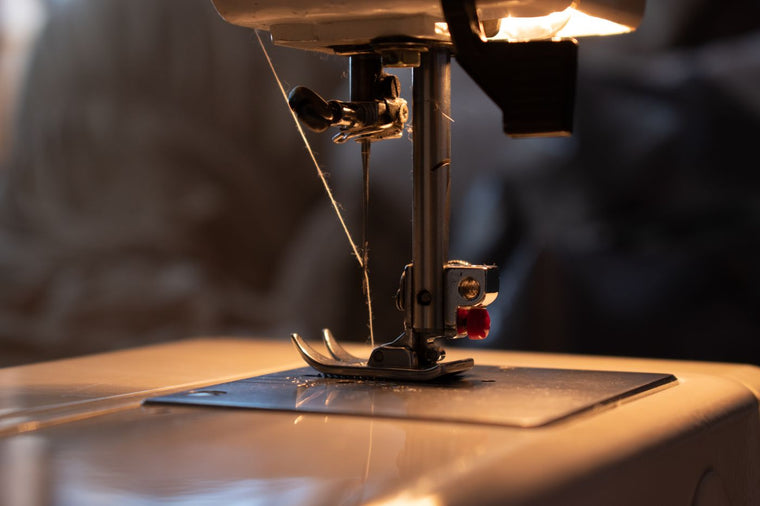
If your sewing thread keeps breaking, your “quick little project” has probably become a rethreading demonstration. Start by checking the upper thread path, needle, spool feed, tension and bobbin. Change one thing at a time and test on a scrap before returning to your fabric.
First, identify whether the upper thread or bobbin thread is breaking. These checks focus on ordinary domestic machine sewing; your model’s manual takes priority.
1. Rethread from the beginning
Raise the presser foot and bring the needle to its highest position as your manual directs. Rethread the complete upper path, including the take-up lever and needle-bar guide.
Singer’s troubleshooting guidance explains that incorrect threading and an obstructed thread path can cause breakage. For a refresher, follow our sewing-machine threading guide.
2. Give the needle a fresh start
Switch off the machine before replacing the needle. Fit a new needle in the correct orientation, fully seated, using a type and size suited to your fabric and thread.
Singer also notes that worn or unsuitable needles can shred thread. A needle that survived the last three projects has experience, but experience is not the same as a sharp point.
3. Check the spool’s escape route
Look for thread catching on a spool notch, rough edge or spool cap. Check the spool position and cap size against your manual. Remove tangles before sewing again.
Try a suitable spool in good condition if the thread itself looks damaged. The shade may be perfect; that does not oblige you to negotiate with a fraying strand.
4. Check tension without dial roulette
Return to your manual’s recommended starting setting. If upper tension is too tight, reduce it in small steps and sew another sample. Our thread tension guide explains what balanced stitches look like.
Do not change the bobbin-case screw casually. Several simultaneous adjustments make it harder to discover what helped.
5. Inspect the bobbin setup
Use the bobbin type specified for your machine and install it correctly. Brother’s breakage checklist includes incorrect bobbins, needle problems and tangles.
Remove accessible lint according to the manual. Guide the fabric rather than pulling it. If breakage persists or you notice damaged parts, stop and seek a qualified technician.
Frequently asked questions
Why does thread fray before snapping?
Check for a worn or unsuitable needle, damaged thread and rough spots along the thread path.
Should I lower tension immediately?
Rethread and check the needle first. Then adjust upper tension gradually if needed.
Can a spool cap cause breakage?
Yes, if thread catches behind it. Use the cap and spool arrangement your manual specifies.
When should I stop troubleshooting?
Stop if basic checks fail, parts look damaged or the machine makes unusual noises.
Keep the next project ready
For everyday sewing, build a Custom Thread Box with ten spools of 40/2 polyester thread, each holding 400 yards, approximately 366 metres. Choose one shade or mix up to five colours. Future you would prefer sewing to another rethreading demonstration.