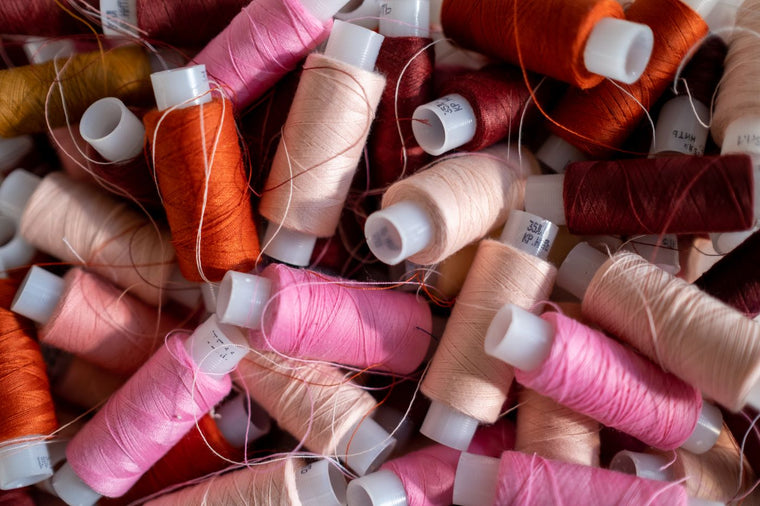
If your thread drawer contains one mystery spool, three brave neutrals, and a colour you bought for a project you no longer remember, welcome. A spool of thread is a wound supply of sewing thread, usually sold by fibre type, length, colour, and thread size. For everyday sewing, choose a smooth spool that suits your fabric, machine, needle, and seam purpose. Then keep a small set of practical colours so you are not making thread decisions while the fabric is already under the presser foot.
For most makers, the important question is not only "what is a spool of thread?" It is "which spool should I use for this project, and do I have enough of it?" This guide explains how to read a spool, when to replace one, how a spool differs from a bobbin, and how to build a useful thread set without collecting every colour in the universe.
STI Ideal Threads has supplied sewing thread since 1999, with thousands of colours and over 60 million spools sold. Each Custom Thread Box includes 10 spools of 400-yard, approximately 366-metre, 40/2 polyester sewing thread, so this guide focuses on practical spool choices for everyday sewing, mending, alterations, quilting, embroidery use, craft projects, and small-batch work.
What is a spool of thread?
A spool of thread is thread wound around a small core so it can be stored, sold, and fed through a sewing machine or used for hand sewing. The spool keeps the thread tidy and helps it unwind in a controlled way.
The word can be used broadly, but in sewing there is a helpful difference:
| Term | What it usually means | Where it is used |
|---|---|---|
| Spool | Main supply of thread | Top of a sewing machine, thread stand, hand sewing kit |
| Bobbin | Small lower-thread supply | Inside the sewing machine bobbin area |
| Cone | Larger thread supply | Overlockers, industrial machines, high-volume sewing |
The bobbin matters because most domestic sewing machines form a lockstitch with two threads: an upper thread from the spool and a lower thread from the bobbin. The two threads interlock inside the fabric. If either thread is poor quality, wound badly, or not feeding smoothly, the stitch can suffer.
How to read a thread spool label
Thread labels vary, but useful spools usually tell you several things:
- Fibre type, such as polyester.
- Length, such as yards or metres.
- Colour number or shade name.
- Thread size, weight, ticket number, tex, denier, or a similar measurement.
- Brand or product line.
The length tells you how much thread is on the spool. The fibre tells you what the thread is made from. The colour code helps you reorder the same shade later. The size helps you judge whether the thread is fine, medium, or heavy for your project.
Thread measurement can be confusing because different systems work in different directions. In some systems, a higher number means a finer thread. In tex and denier systems, a higher number means a heavier thread. This is why the best label is not just a number; it is the number plus the use case.
STI Ideal's 40/2 polyester sewing thread is a practical everyday thread. The "40/2" describes a fine two-ply construction, useful for many ordinary sewing projects where neat stitching matters.
How much thread is on a spool?
It depends on the spool. Small hand sewing spools may carry a short length, while large cones can hold thousands of metres. STI Ideal spools hold 400 yards, approximately 366 metres, which gives makers a practical amount for everyday sewing, repairs, and colour planning.
For project planning, remember that thread is used in both the top and bobbin on a sewing machine. A seam that looks like one line of stitching is actually using two thread supplies. Dense stitching, decorative work, quilting, long hems, and repeated test seams use more thread than a quick straight seam.
Use this rough planning guide:
| Project type | Thread planning note |
|---|---|
| Small repair | One suitable spool is usually enough |
| Hem or alteration | Choose a close colour and wind a matching bobbin first |
| Garment construction | Keep extra thread if there are long seams, topstitching, or mistakes to unpick |
| Quilting or dense stitching | Expect higher thread use because there are many stitched lines |
| Embroidery use or decorative work | Plan by design density and colour changes |
If you are unsure, choose more thread than you think you need. Running out one seam before the end is a small test of character that nobody requested.
Spool vs bobbin: why both matter
The spool feeds the upper thread. The bobbin feeds the lower thread. In a lockstitch machine, both threads work together to form the stitch.
For normal construction sewing, use the same thread type in the top and bobbin. This keeps tension easier to balance and makes the seam more predictable. You can use different colours when the top and underside of the fabric are different, but keep the thread type and weight compatible unless you are intentionally testing a special technique.
Before sewing the real project:
- Wind the bobbin evenly.
- Insert the bobbin in the correct direction for your machine.
- Thread the upper spool through every guide.
- Test the stitch on a fabric scrap.
If the stitch loops, puckers, or snaps, do not blame the spool first. Check threading, bobbin direction, needle size, tension, and lint. The sewing machine remembers everything, especially the one guide you skipped.
Choose the right spool for the fabric
A good spool of thread should suit the fabric, needle, and purpose of the seam. For many everyday sewing projects, polyester sewing thread is a versatile choice because it is smooth, widely used, and practical for garment making, mending, alterations, quilting, embroidery use, craft projects, and small-batch work.
Avoid making one spool do every job. Very delicate fabrics may need finer thread and a finer needle. Decorative topstitching may need a heavier thread and a larger needle. Some specialist materials need specialist thread. The everyday spool is valuable because it covers ordinary work well, not because it should be forced into every possible situation.
When choosing, ask:
- Will the stitching be visible?
- Is the fabric light, medium, or heavy?
- Is this a seam, hem, repair, quilt line, or decorative stitch?
- Does the thread pass smoothly through the needle eye?
- Does the thread colour blend with the visible fabric area?
The right spool should behave quietly. If it shreds, snaps, sheds heavily, or refuses to feed smoothly, pause and test before continuing.
Choose useful thread colours
Colour choice is where a simple spool becomes strangely emotional. Three beige shades can look identical until one of them sits proudly on a seam.
For seams that should disappear, match the thread to the visible part of the fabric. Lay a single strand across the fabric in natural light. Do not judge only from the wound spool, because wrapped thread often looks darker or stronger than one strand on fabric.
If two colours are close, the slightly darker one often blends more quietly on medium or dark fabric. On very pale or fine fabric, a lighter option may sometimes look softer. For printed fabric, match the background colour when the stitching crosses several colours, or match the area where the seam will be most visible.
STI Ideal's fabric photo colour matcher can help you find the closest available STI Ideal shade. Treat it as a practical closest-shade helper, because screens, lighting, cameras, fabric texture, and dye lots can affect how colour appears.
How to tell if an old spool is still usable
Old thread can be useful, but it needs a quick check. Thread may weaken over time, especially if it has been stored in sunlight, heat, humidity, dust, or a mystery drawer with pins, elastic, and one button from 2008.
Before using an older spool:
- Pull off a short length and tug gently.
- Check whether it snaps too easily.
- Look for fuzz, uneven thickness, or fraying.
- Feel whether it runs smoothly between your fingers.
- Test it through the machine on scrap fabric.
If it breaks easily or sheds heavily, do not use it for an important seam. Keep sentimental vintage spools for display, basting, or low-risk testing rather than garment construction.
How many spools should you keep?
You do not need every colour. You need a sensible set of colours that match the projects you actually sew.
A practical 10-spool set might include:
- White or soft white.
- Black or near-black.
- Cream or beige.
- Medium grey.
- Navy.
- Brown or taupe.
- A light colour you use often.
- A dark colour you use often.
- A current project colour.
- One repair or accent colour.
This is why a custom box works better than a random thread bundle. Random colours look exciting until half the box has no relationship with your fabric stash. Ten useful spools beat thirty mystery colours every time.
With STI Ideal's Custom Thread Box, you can choose one shade or mix up to five colours in a 10-spool box. Each spool holds 400 yards, approximately 366 metres, of 40/2 polyester sewing thread, and there are thousands of colours to choose from.
Store thread so it stays ready to sew
Good thread storage keeps spools clean, dry, visible, and easy to grab.
Store spools:
- Away from direct sunlight.
- Away from damp areas.
- In a closed box, drawer, organiser, or thread case.
- With colour numbers visible where possible.
- Away from dust, lint, and loose pins.
Avoid letting thread tails tangle across the drawer. Use spool caps, small clips, thread nets, or the spool's built-in notch if it does not damage the thread path. A tidy spool drawer is not showing off. It is reducing future arguments with thread tails.
Common spool mistakes to avoid
Do not buy thread only because the colour looks pretty on the spool. Test a strand on fabric.
Do not assume all spools are the same size, fibre, or thread weight. Check the label.
Do not use brittle vintage thread for important seams.
Do not mix very different thread types in the top and bobbin unless you are testing a specific technique.
Do not use a spool that catches on its notch or sticker while sewing. Reposition it, use a spool cap, or transfer to a better setup.
Do not build a thread set around imaginary projects. Start with the fabrics and repairs you actually sew.
The simple takeaway
A spool of thread is the main thread supply for sewing, but the best spool is not just any spool. Choose by fibre, size, length, colour, fabric, and project. For everyday sewing, a smooth 40/2 polyester sewing thread is a practical choice for many garments, repairs, quilting lines, craft projects, embroidery use, and small-batch work.
If you want a useful starting set, build around real colours: neutrals, frequent fabrics, current projects, and repairs. STI Ideal's Custom Thread Box lets you choose 10 spools of 400-yard, approximately 366-metre, 40/2 polyester sewing thread from thousands of colours.
Frequently asked questions
What is a spool of thread?
A spool of thread is thread wound around a small core so it can be stored and fed into sewing work. In machine sewing, the spool usually supplies the upper thread while the bobbin supplies the lower thread.
What is the difference between a spool and a bobbin?
A spool is the main supply of thread, usually placed on the top or side of the sewing machine. A bobbin is a smaller thread supply that sits inside the bobbin area and forms the lower part of a lockstitch.
How much thread is on a spool?
It depends on the brand and spool size. STI Ideal spools hold 400 yards, approximately 366 metres, of 40/2 polyester sewing thread. Always check the spool label before planning a project.
How do I choose a spool of thread for sewing?
Choose a spool by fibre, thread size, colour, fabric type, needle size, and project purpose. For everyday sewing, a smooth polyester sewing thread is often practical, but delicate, decorative, or specialist projects may need a different thread.
Can I use the same spool for the top thread and bobbin?
Yes, for normal construction sewing it is usually best to use the same thread type and weight in the top and bobbin. You can use different colours when needed, but test first to make sure the stitch balance looks good.
Does thread colour look different on the spool?
Yes. Thread often looks darker or stronger when wrapped around the spool. Unwind a single strand and lay it across the fabric in natural light before choosing the final colour.
When should I throw away an old spool of thread?
Replace or retire a spool if the thread snaps easily, feels brittle, sheds heavily, looks uneven, or causes repeated machine problems after rethreading and changing the needle. Sentimental old spools can still be kept for display or low-risk use.
Build your box
Once you know which spools earn their place, you can browse thousands of colours and box up the ten you actually use — one shade or a mix of up to five, all 40/2 polyester. New to choosing thread? Start with choosing the right thread for your project or thread weights explained, or browse the full range in our catalogue.